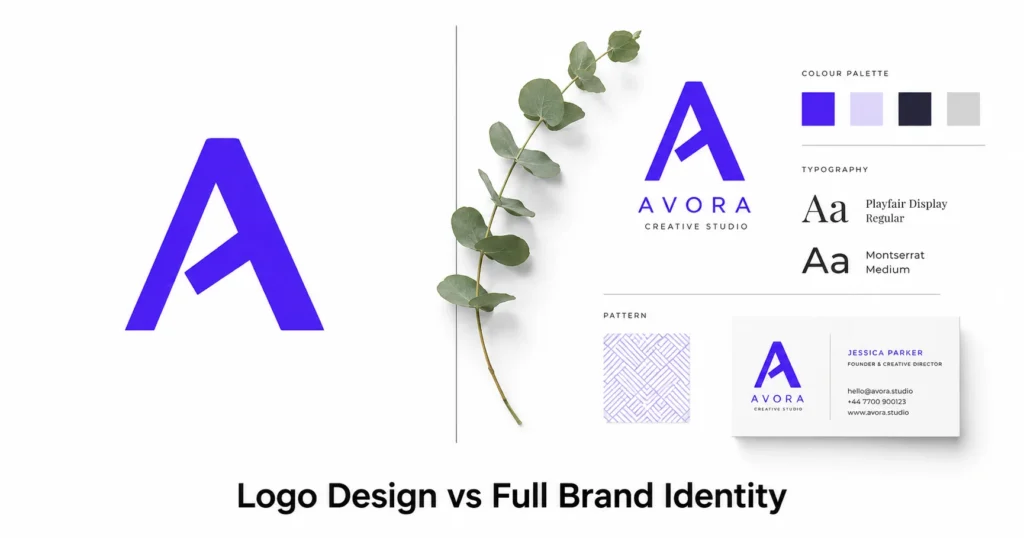
Most small business owners come to us asking for a logo. After a 10-minute conversation, about half of them realize they actually need something else entirely.
That’s not a pitch. It’s just the reality of how confusing this space is.
“Logo” and “brand identity” get used interchangeably all the time by clients, by designers, even by agencies that should know better. But they are not the same thing, and choosing the wrong one wastes money in both directions. You can spend $3,000 on a full brand package when a $500 logo would have done the job. Or you can spend $200 on a logo from Fiverr and then wonder why your business still doesn’t look like it belongs in the room.
This post is a straight breakdown of what each one is, what it actually costs, and how to figure out which one your business needs right now.
What a Logo Actually Is (And What It Isn't)
A logo is a mark. That’s it.
It’s a visual symbol a wordmark, an icon, a letterform, or some combination that represents your business at a glance. When someone sees the Nike swoosh, they don’t need the word “Nike” next to it. That’s what a strong logo does. It becomes a shorthand for everything your company means to people.
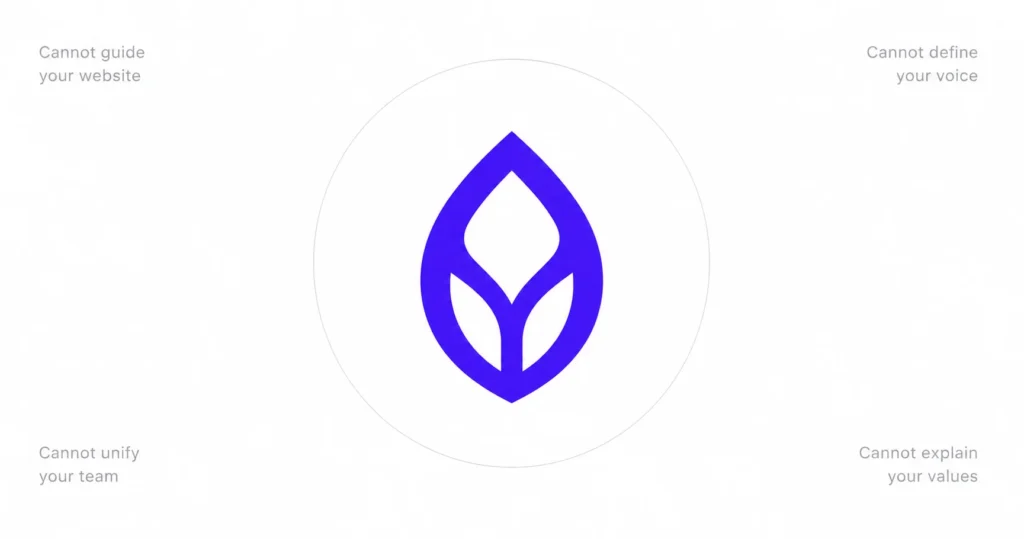
But here’s what a logo cannot do on its own:
- It can't tell someone what you stand for
- It can't guide how your website looks
- It can't explain what makes you different from your competitor down the street
- It can't make your Instagram feed feel consistent
- It can't give your sales deck a visual language that matches your business cards
A logo is the cornerstone of a brand not the whole building.
When a logo alone is the right call:
You’re early. You need something professional to put on your email footer and your website header. You’re not yet in a phase where deep strategic positioning matters because you’re still figuring out your audience. You need to look credible, not iconic and you need to do it on a budget.
A clean, well-designed logo handles this. Don’t overcomplicate it.
What a Full Brand Identity Actually Covers
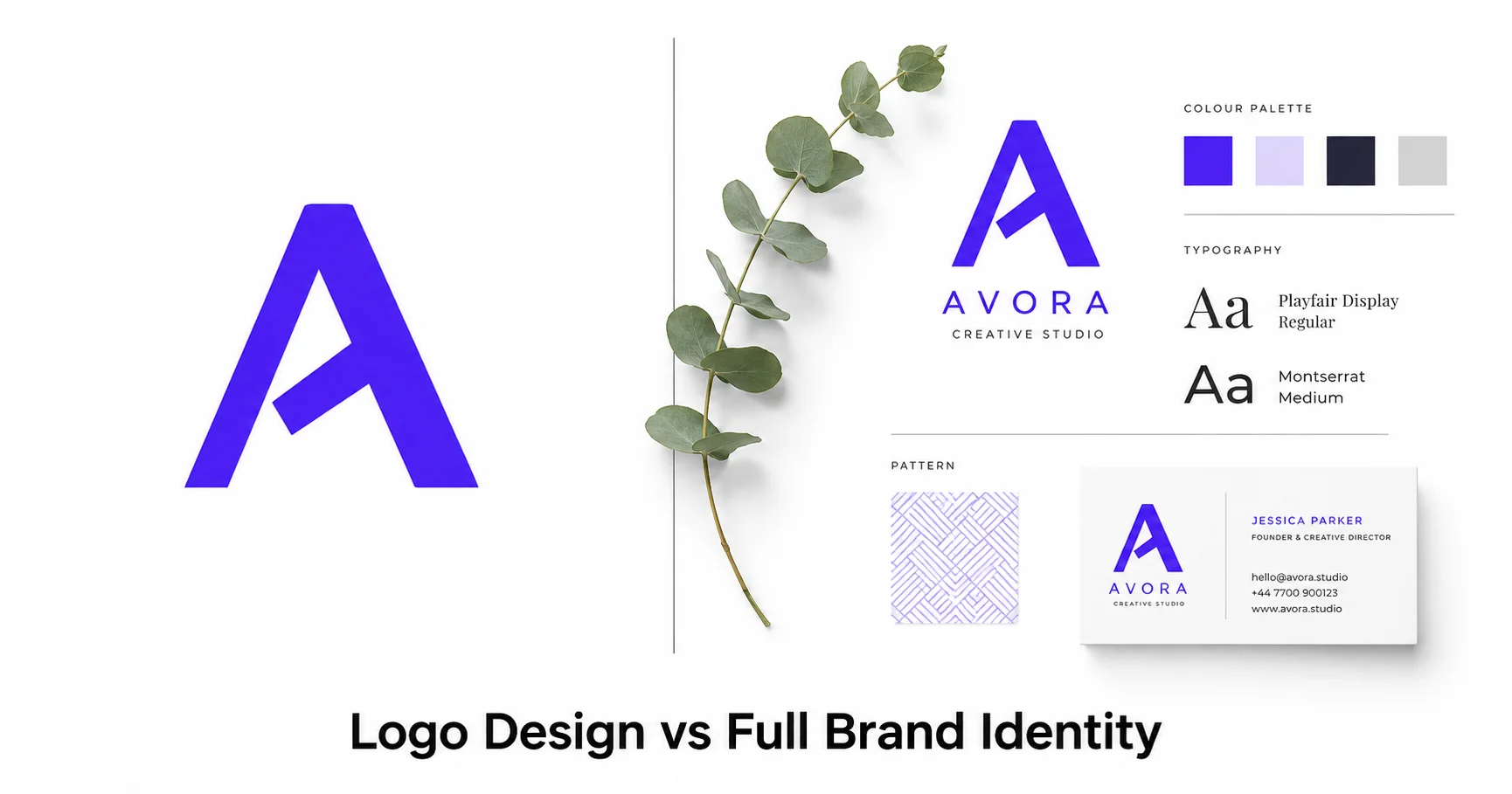
A brand identity is the complete visual and strategic system your business uses to show up consistently everywhere.
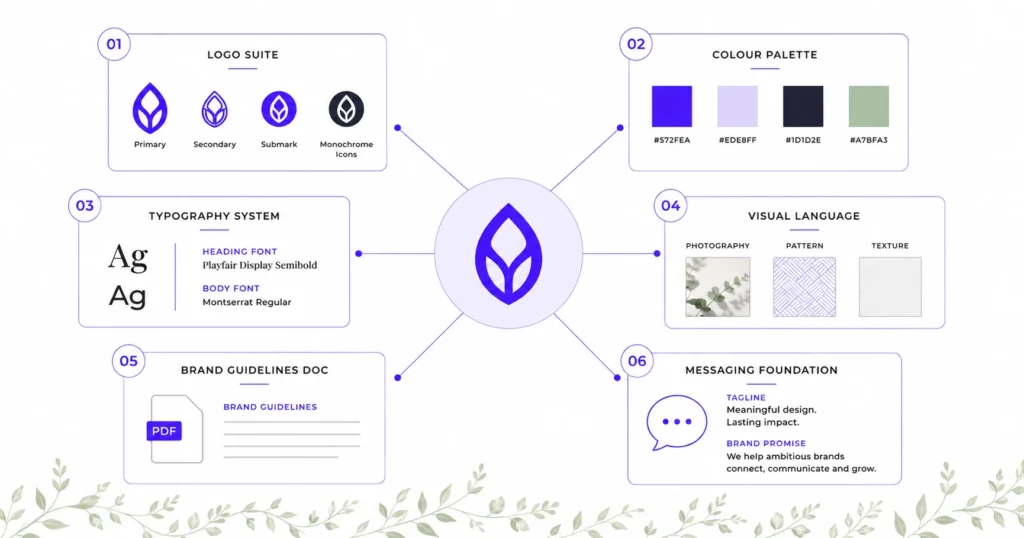
Where a logo is the mark, brand identity is the rulebook for how that mark and everything around it gets used. Here’s what a proper brand identity package typically includes:
Logo Suite Primary logo, secondary logo, submark/icon, monochrome versions. You need all of these because your logo gets used in wildly different contexts.
Colour Palette Not just “we like blue.” Specific HEX, RGB, and CMYK codes for your primary colours, secondary colours, and accent colours. This is what keeps your website, social posts, and packaging from looking like they belong to three different companies.
Typography System Which fonts you use, in what sizes, for what purpose. Headings, body copy, captions, buttons. If your designer hands you a logo and says “use any font you like,” they’ve done half the job.
Visual Language Photography style, illustration style, iconography, patterns, textures. This is what makes a brand feel consistent even when there’s no logo in sight.
Brand Guidelines Document The single PDF that tells anyone who touches your brand your web developer, your social media manager, your print shop exactly how everything gets used.
Messaging Foundation Some brand identity projects also include positioning statements, taglines, and tone of voice guidelines. When they do, this is where a brand becomes genuinely strategic.
The Part Most People Skip (And Pay For Later)
A logo without brand guidelines is like handing someone a house key with no address.
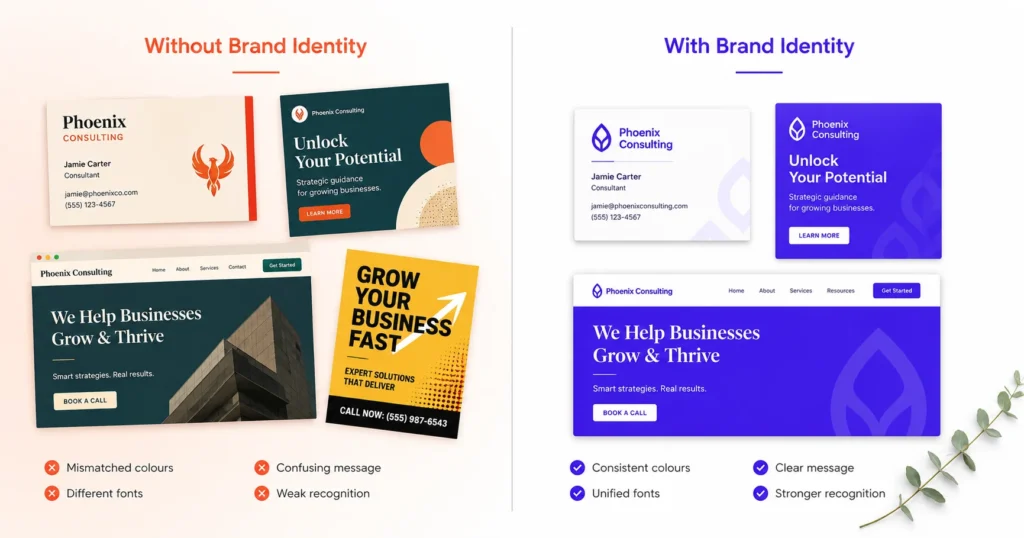
It’s useful in exactly one scenario the one it was designed for. The moment you need a second designer, a new platform, a printed banner for a trade show, or a pitch deck for investors, you’re back to square one. You’re making decisions from scratch every time.
This is the hidden cost of going logo-only when your business actually needed more. You don’t pay for it upfront. You pay for it in a dozen small inconsistencies that slowly erode how professional your business looks.
So Which One Do You Actually Need?
Honest answer: it depends on where your business is.
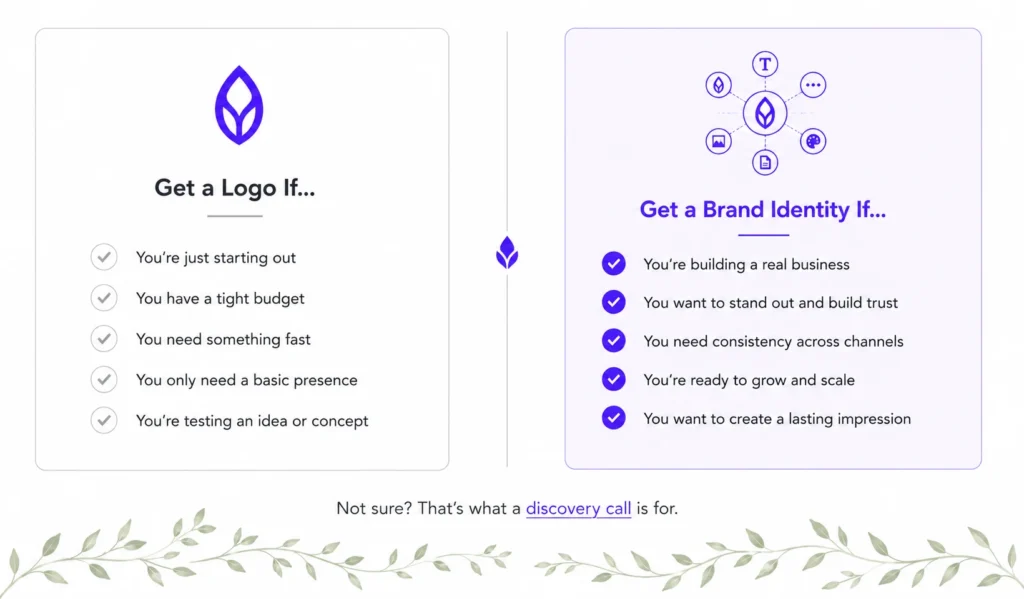
Get just a logo if:
- You're pre-revenue or in your first 6–12 months
- Your budget is under ₹25,000 and you need something to ship fast
- You're testing a concept before committing to full branding
- You already have solid brand guidelines and just need a new mark
Get a full brand identity if:
- You're raising investment or pitching enterprise clients
- You're rebranding after a pivot or a merger
- You're launching a product line or a new service category
- You look unprofessional on some channels and can't figure out why
- Multiple people are managing your visual presence and nothing looks consistent
- You're ready to grow and want your visual presence to grow with you
One more thing worth saying: brand identity is not a one-time event. It’s a foundation you build on. Getting it right at the right stage of your business growth is the difference between looking like a startup and looking like a company.
A Real Example of What This Looks Like
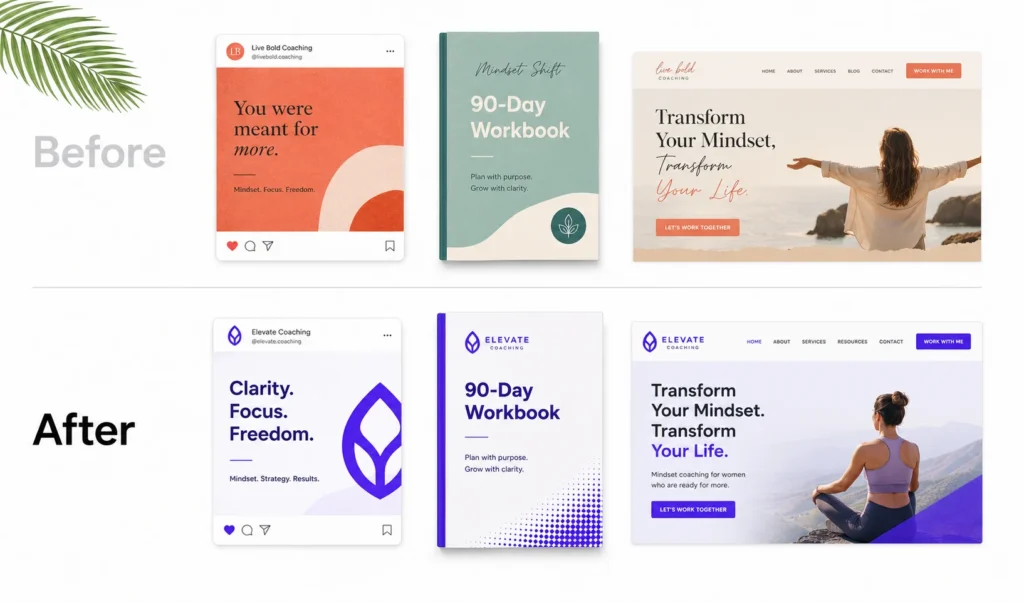
One of our clients a business coach in the early stages of launching her flagship program came to us with a logo she’d had made three years earlier. It was fine. Genuinely, it wasn’t bad.
But her website had different fonts. Her Instagram used colours that weren’t in her logo. Her PDF workbooks looked completely disconnected from her social media. Prospects who found her through different channels weren’t sure they were looking at the same business.
She didn’t need a new logo. She needed a system built around the one she already had.
We built out her full brand identity colour palette, typography hierarchy, brand guidelines, and a refreshed visual language. Three months later, her discovery call conversions went up because her brand finally looked as credible as her offer actually was.
That’s the difference.
What to Ask Before You Brief Any Designer
Before you spend anything, answer these four questions:
1. Where will this brand live?
If it’s just your website and email signature, a logo and a couple of fonts might be all you need. If it’s across social media, print, video, packaging, and a sales team you need a full system.
2. How many people will manage your visual presence?
The more people touch your brand, the more you need documented guidelines. Otherwise you get chaos.
3. Are you still figuring out your positioning?
If you’re not sure who your audience is or what makes you different, full brand identity work especially the strategic side is where you start. A logo can’t answer these questions.
4. What does your next 12 months look like?
If you’re raising funding, hiring a sales team, launching new services, or going after bigger clients, build the brand to match that ambition now. Retrofitting later is always more expensive.
What Axcilence Does Differently
Most agencies sell you a logo. Some sell you a brand identity. We start by asking which one you actually need and if it’s neither yet, we’ll tell you that too.
Our branding work starts with strategy. Not mood boards. We want to understand your positioning, your audience, and your growth plans before we open a single design file. The visual work comes after, and it comes informed.
If you’re not sure where to start, book a free discovery call and we’ll help you figure it out in 30 minutes. No pitch. Just clarity.
Key Takeaways
- A logo is a mark. A brand identity is the full visual and strategic system around it.
- You need a logo when you're early-stage, testing, or on a tight budget.
- You need a brand identity when consistency, credibility, and growth are the priority.
- The hidden cost of going logo-only too early is inconsistency and inconsistency erodes trust.
- The right time to invest in brand identity is before you grow not after it becomes obvious you needed it.